Media
Milky Way Galaxy
The following image is of the Milky Way galaxy and was taken by NASA's Spitzer Space Telescope's infrared cameras to penetrate much of the dust, revealing the stars of the crowded galactic center region. Because we are inside of this galaxy we see the cross section of the galaxy's disk, but when we look out side of our galaxy to view other galaxies we can then see their spiral shape. The bright dots you see are other stars in the Milky Way.
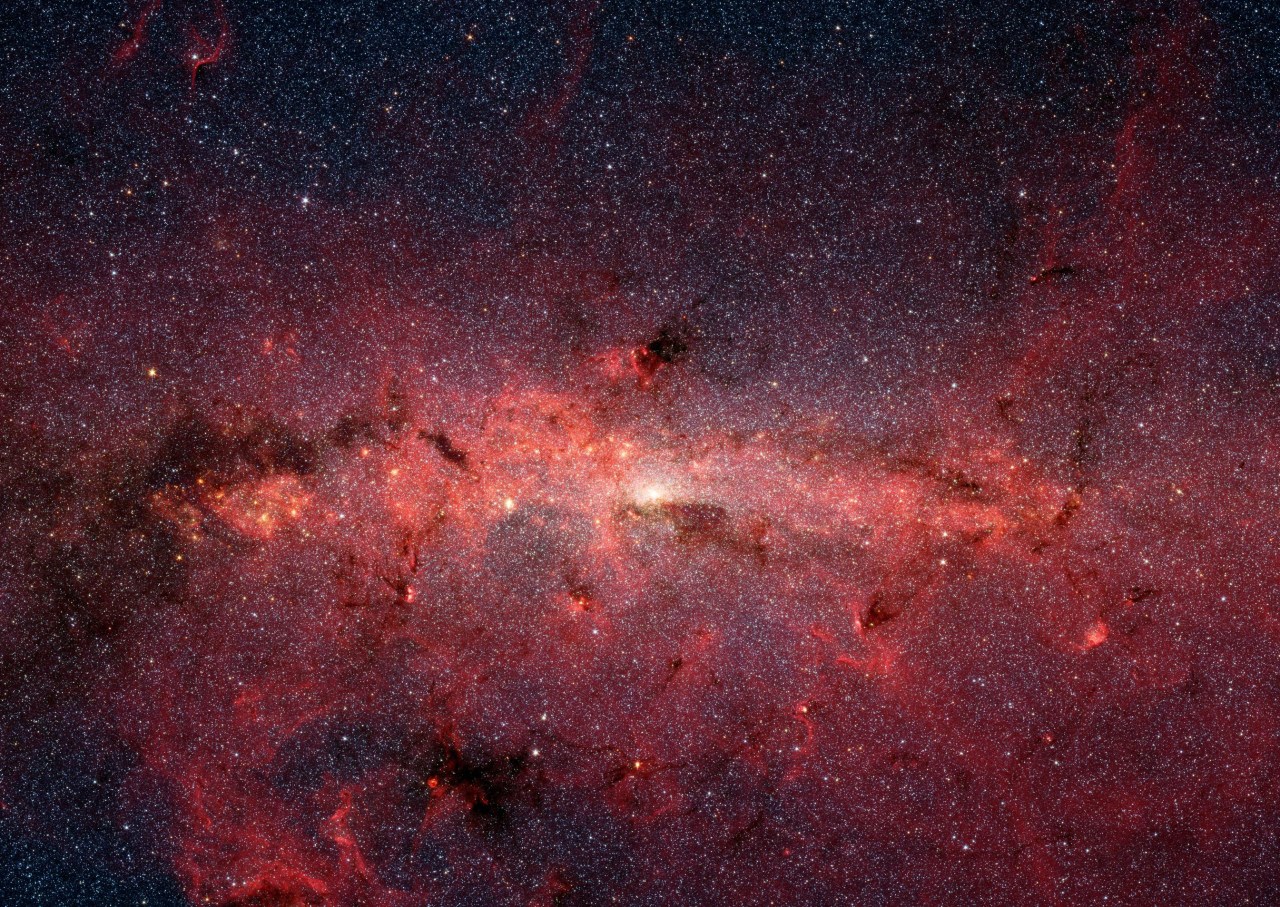
credit: NASA
Messier 81 Galaxy
The following galaxy is fairly close to our own (12 million miles away), and is known as the Messier 81, and is located in the northern constellation of Ursa Major (which also includes the Big Dipper). You should take not of its spiral arms. This image was taken by NASA's Spitzer Space Telescope.
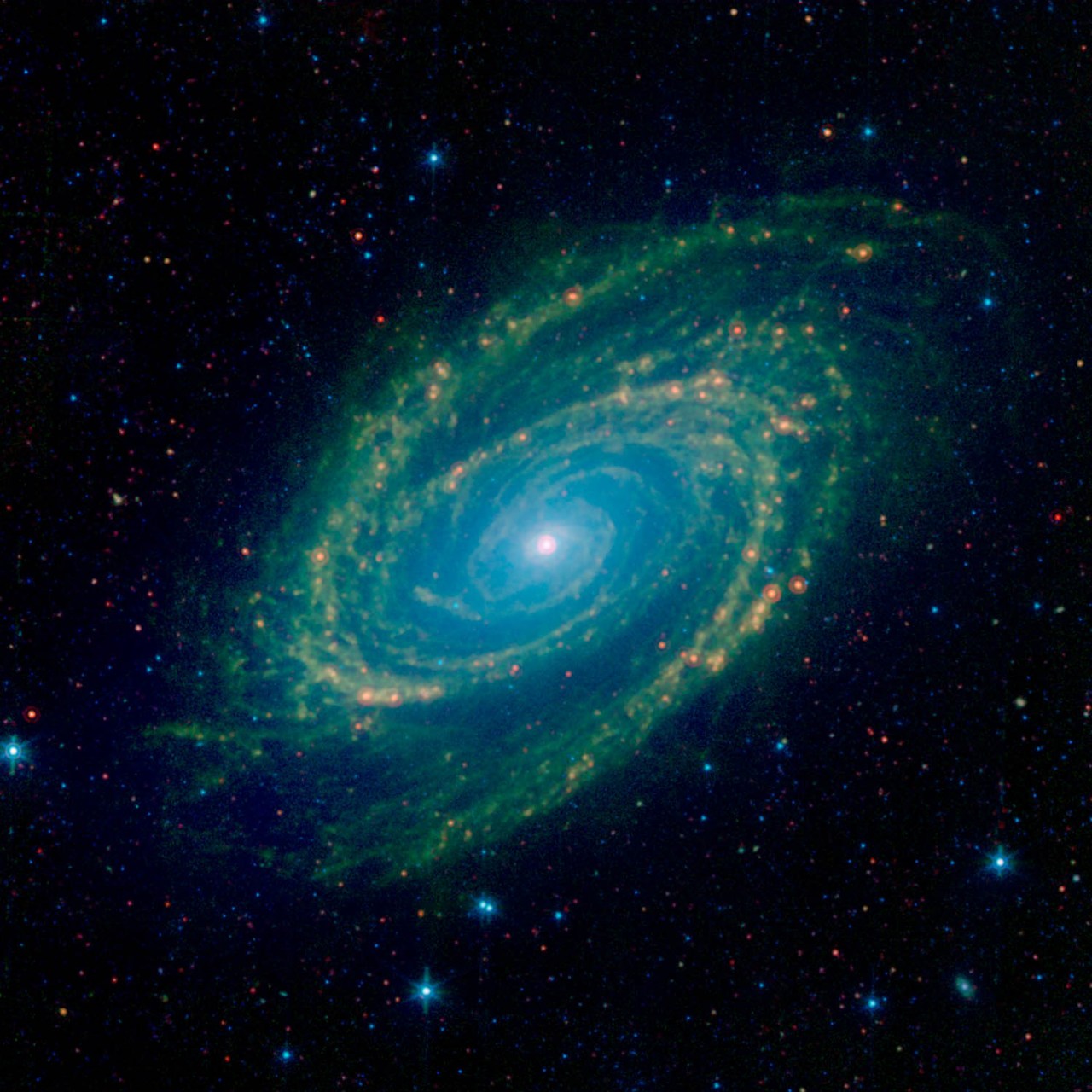
credit: NASA
Andromeda Galaxy
The following is an image from NASA's Wide-field Infrared Survey Explorer (WISE) of the Andromeda galaxy, which is the closest galactic body to use, and is 2.5 million miles away. The bright dots you see in the spiral are stars in the Andromeda galaxy, and the bright blue dots you see in the background are other galaxies.
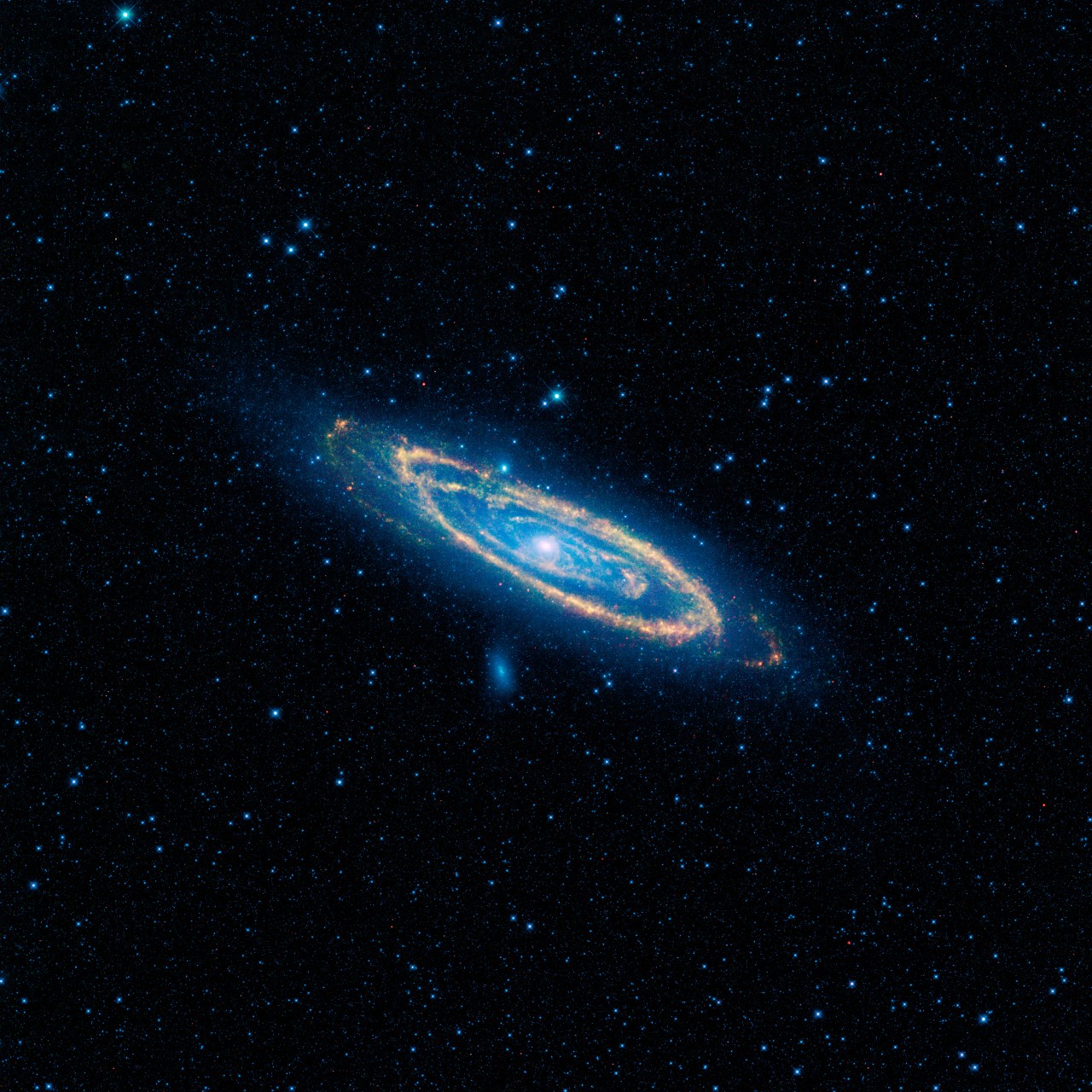
credit: NASA
Mini Lecture - Light Year (Speed of Light)
This video explore how vast space is, and that it is so big, and everything is so far spread out, that it even takes light a very long time to traverse it.
Time: 4:48
Mini Lecture - Oblers Paradox (Space Between Stars)
Time: 5:27
Evidence for the Big Bang
In this video you will learn about the evidence for the Big Bang.
Time: 12:34
Cosmic Microwave Background Explained
CMB Radiation is left over radiation from the annihilate of matter and antimatter in the early universe. For example, an electron and a positron annihilate each other, and to conserve energy and momentum two photons are produced. Photons are particles of light, and the amount of energy they have determine what type of light they are. These two photons are gamma rays. Over billions of years, the universe expands, and these gamma rays elongate becoming what they are today: microwaves.
Time: 7:09